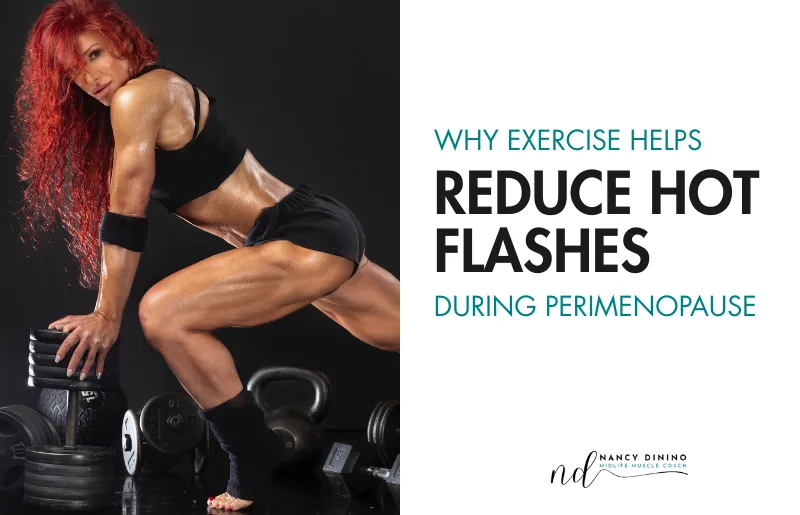
Why Exercise Helps Reduce Hot Flashes During Perimenopause
Why Exercise Helps Reduce Hot Flashes During Perimenopause
If you are navigating perimenopause and dealing with hot flashes that seem to strike out of nowhere during meetings, at night, or mid workout, you are not imagining it. Fluctuating estrogen levels disrupt the body’s internal thermostat, making temperature regulation far more sensitive. The good news is that regular exercise is one of the most effective, research supported tools for reducing hot flashes and their intensity.
Here is how movement works with your changing physiology, not against it.
Exercise Improves Thermoregulation
Hot flashes occur when the brain’s temperature control center, the hypothalamus, becomes overly sensitive due to hormonal fluctuations. Exercise helps retrain this system.
Consistent physical activity improves blood vessel function and heat dissipation, allowing your body to regulate temperature more efficiently. Over time, this narrows the thermoneutral zone, meaning your body is less likely to overreact to small temperature changes, which is one of the primary triggers of hot flashes.
Exercise Reduces Frequency and Severity of Hot Flashes
Multiple studies show that women who exercise regularly experience fewer and less intense hot flashes than sedentary women.
Both aerobic exercise and resistance training appear beneficial, likely due to improved circulation, reduced inflammation, and enhanced autonomic nervous system balance. Strength training is particularly powerful because it improves insulin sensitivity and helps preserve lean muscle mass, two factors that decline during perimenopause and are linked to worsening symptoms.
In short, movement creates a more stable internal environment.
Exercise Helps Regulate Sleep
Night sweats and hot flashes often go hand in hand with disrupted sleep, and poor sleep can worsen vasomotor symptoms the following day.
Exercise supports better sleep by increasing deep, restorative sleep, regulating circadian rhythms, and reducing nighttime awakenings. Women who exercise consistently report fewer night sweats and improved sleep quality, creating a positive feedback loop that further reduces hot flashes.
Exercise Reduces Stress and Cortisol
Stress is a major and often overlooked trigger for hot flashes. Elevated cortisol increases nervous system reactivity, making hot flashes more frequent and intense.
Exercise, especially strength training and moderate intensity movement, lowers baseline cortisol levels and improves stress resilience. It also boosts endorphins and serotonin, improving mood and reducing anxiety, which helps stabilize the nervous system.
Yes! Fewer Hot Flashes
Exercise does more than help you stay fit during perimenopause. It directly addresses the physiological drivers of hot flashes by improving thermoregulation, sleep quality, stress response, and overall hormonal stability.
The key is smart, consistent training, not extreme workouts or endless cardio.
Ready for a Program Built for This Season of Life?
Strong & Sexy is designed specifically for women navigating perimenopause and beyond, using strength training, recovery focused programming, and hormone supportive strategies to help you feel strong, confident, and in control of your body again.
👉 Join Strong & Sexy here:
https://nancydinino.com/strong-and-sexy
Sources
https://pubmed.ncbi.nlm.nih.gov/24327571/
https://pubmed.ncbi.nlm.nih.gov/19499554/
https://pubmed.ncbi.nlm.nih.gov/25803600/
https://pubmed.ncbi.nlm.nih.gov/24710962/