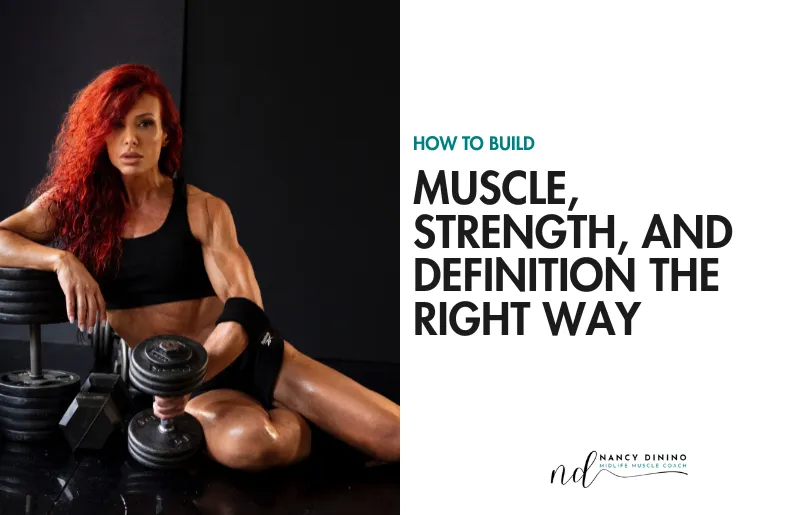
How to Build Muscle, Strength, and Definition the Right Way
If you've ever wondered why your training feels random or why your results seem to plateau no matter how consistently you show up, the answer might come down to one thing: training phases. Understanding how to structure your training across different phases is one of the most important and most overlooked pieces of building a body that actually responds.
Here's a breakdown of the five key training phases and how each one serves a specific purpose in your overall program.
Phase 1: Base Hypertrophy
This is your muscle building phase and the foundation of most women's programs. It typically runs four to eight weeks, though it can extend longer depending on your goals. Your rep range sits between six and twelve reps, with three to five sets per exercise and rest periods of thirty to ninety seconds. You're working at sixty-five to eighty percent of your one rep max with a focus on progressive overload, meaning you're consistently increasing your reps, your weight, or your time under tension over the course of the phase. Your program split during this phase can follow push and pull with legs, upper and lower, or full body, depending on what works best for your individual goals and schedule.
Phase 2: Strength Phase
The strength phase is about getting stronger without necessarily getting bigger. This phase runs three to six weeks with a rep range of three to six reps, three to six sets, and longer rest periods of two to five minutes to allow for full recovery between heavier lifts. Your intensity increases to eighty to ninety-five percent of your one rep max while your overall volume stays moderate to low. The purpose of this phase is to build the strength foundation that supports heavier and more effective hypertrophy work later.
Phase 3: Power Phase
The power phase focuses on speed and explosiveness, making it one of the more advanced and exciting phases for experienced lifters. It runs three to four weeks with a rep range of one to three reps, three to six sets, and rest periods of two to four minutes. You're working at sixty to ninety percent of your one rep max but moving the weight fast rather than slow and controlled. This phase is often used for athletes or advanced lifters and serves to prime your muscles between strength cycles rather than drive hypertrophy directly.
Phase 4: Cutting and Maintenance
This phase sits between your hypertrophy blocks and runs four to six weeks or longer. The goal is to preserve the muscle you've built while reducing body fat or allowing for recovery. Your calories during this phase will be at a slight deficit or close to maintenance, your training volume stays moderate, and cardio increases to support fat loss while protecting your gains. This is the phase most commonly associated with leaning out or preparing for a competition.
Phase 5: Deload and Recovery
The deload phase is one week long and should be scheduled every four to eight weeks depending on how hard you've been training. During this week you reduce your weights to forty to sixty percent of your normal load and cut your volume in half. The goal is complete recovery for both your muscles and your nervous system, supported by proper sleep and rest.
This is not optional. It's essential. Your muscles grow during recovery and sleep, not during the workout itself. Skipping your deload is one of the fastest ways to stall your progress and increase your injury risk.
Why This Matters for You
As you can see, effective training is far more nuanced than showing up to the gym and repeating the same routine week after week. The right phase, applied at the right time and built around your individual goals and physiology, is what produces real, visible, lasting results.
If you're ready to stop guessing and start training with a plan that's built specifically around your body and your goals, we'd love to work with you.