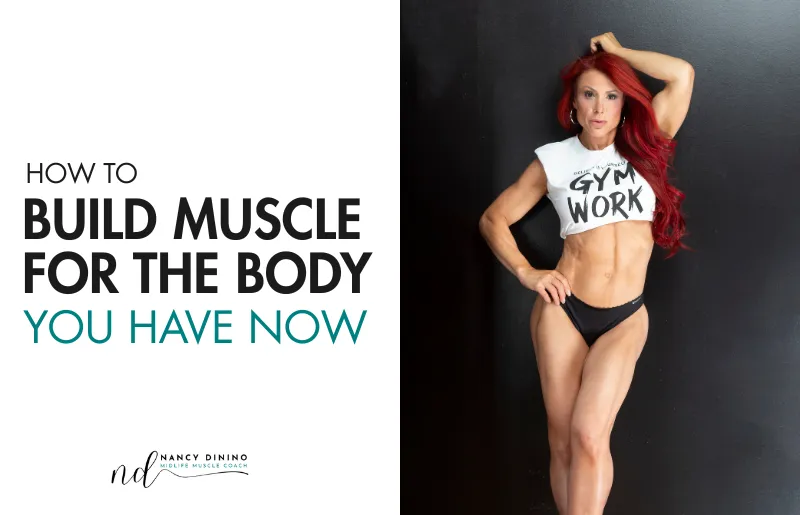
How To Build Muscle for the Body You Have Now
How To Build Muscle for the Body You Have Now
Your body isn’t broken and nothing is wrong with you. Your physiology is simply shifting gears. The fact is, your body is just different from where it once was.
If you’ve been feeling like your workouts aren’t working anymore, even though you’re doing everything “right,” it's not because you are lazy or suddenly unable to see progress. It's because your body in your 40s, 50s, and beyond does NOT respond the same way it did in your 20s.
And know this - that is NOT something to fight or avoid. It is something to understand and support. We're going to talk about both below.
So, whether you are in perimenopause and dealing with unpredictable hormones or postmenopause and noticing your body is slower to respond to your old routines, the truth is straightforward:
You can still build muscle.
You can still feel strong.
You simply need to honor your body where it is today, not chase what you used to look like.
This phase of life is NOT about going backward (we're ditching that old way of thinking). It is about building strength, stability, and confidence for the long run.
How to Build Muscle During Perimenopause
Hormones are fluctuating, cycles may be inconsistent, and your energy may feel all over the place. Your training needs to adjust to match this internal shift.
1. Strength Train with Progressive Overload
Strength training should be a primary focus. The goal is to slowly increase weight, reps, or time under tension so your muscles have a reason to grow.
2. Respect Recovery
Your nervous system is more sensitive now. You don't need to push to the limit every session. Growth happens when you recover AND rest. And yes, rest is just as important as the workout itself.
3. Increase Protein Intake
Aim for approximately 1 gram of protein per pound of body weight. Under-eating, especially protein, is one of the fastest ways results stall. A helpful benchmark here if you're not sure how to get more protein in easily - add a little bit to every meal and snack.
4. Reduce Excessive Cardio
Too much cardio can elevate cortisol and make muscle harder to maintain. Keep cardio moderate and intentional.
How to Build Muscle After Menopause
Once estrogen levels decline and stabilize, your body needs more DIRECT and structured support.
1. Prioritize Consistent Strength Training
Plan 4-5 split training strength sessions per week and include a main lift like squats, deadlifts, rows, and overhead presses on each day.
2. Support Joint Function and Mobility
Incorporate dynamic warm-ups, mobility work, and gentle conditioning activities like walking or cycling.
3. Double Down on Sleep and Recovery
Aim for 7 to 9 hours of sleep per night. Recovery is where muscle rebuilds and hormones regulate.
4. Consider Hormone and Supplement Support
BHRT, creatine, magnesium, and protein supplementation can all help maintain muscle and support energy. Work with a qualified practitioner who understands menopause physiology.
Your New Normal Needs New Rules
Your strength journey isn't over. It just needs a smarter, more informed approach. Building muscle in midlife is not about getting back to who you were. It’s about supporting the body you have today and helping it thrive for years to come.
Maybe you used to hit the gym five days a week without thinking twice. Maybe you skipped meals and still felt fine. But now? Things have changed. Your energy, your recovery, your results, they all feel different.
That’s not a sign you’re doing something wrong. It’s a sign your body needs something different.
So if you’re feeling stuck, frustrated, or like your old workouts just aren’t cutting it anymore, this is your reminder that you don’t need to go backward. You need to move forward with a plan that meets you where you are.
Midlife is not the end of strength. It’s the beginning of doing it on your terms.
You need a strategy that feeds your muscle, supports your hormones, and makes you Strong & Sexy for the rest of your life! Ready to get started? Submit an application and I will send more details on how I can help.